
Research & Development
PHYSICAL LAB develops research-driven methods, software and simulation tools for acoustics, electroacoustics and multiphysics engineering.
Our R&D combines physics-based modelling, numerical simulation, precision measurement and experimental validation — with a clear focus on turning scientific insight into practical engineering tools.
Current developments include free-field reconstruction, automated measurement software, vibroacoustic contribution analysis and simulation verification.
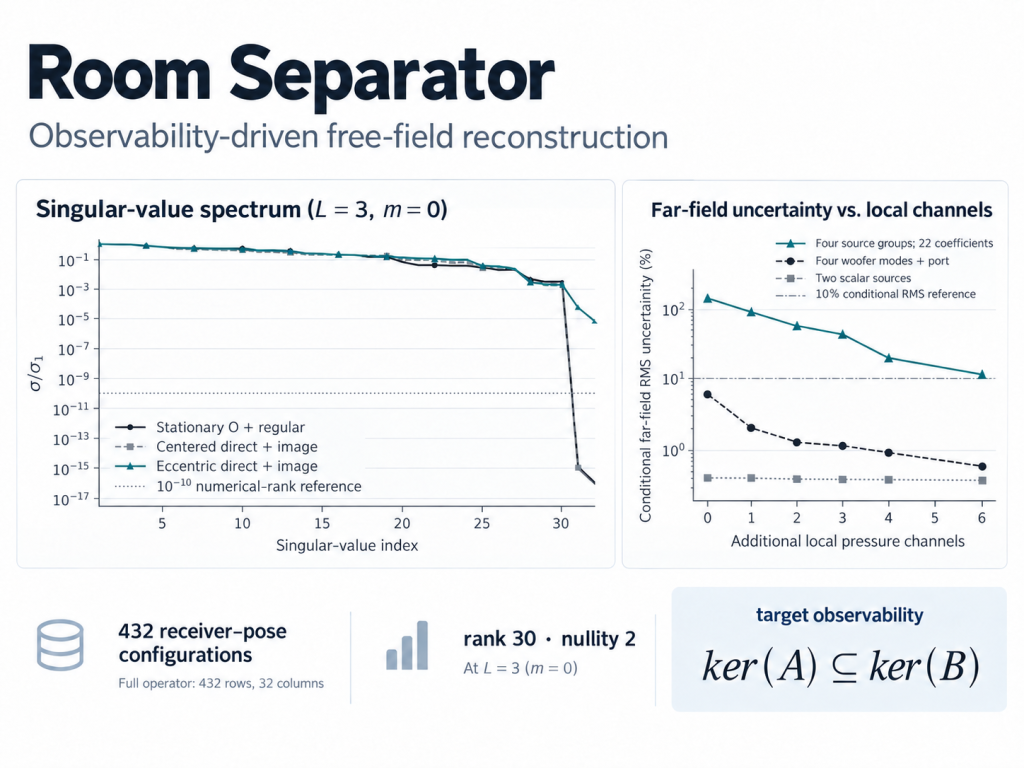
Reconstructing free-field information from in-room measurements
The Room Separator research investigates how useful free-field loudspeaker information can be reconstructed from measurements made in a reflective room.
The framework combines pose-aware inverse acoustics, observability analysis and uncertainty-aware reconstruction to determine not only what can be estimated, but when the result is physically supported.
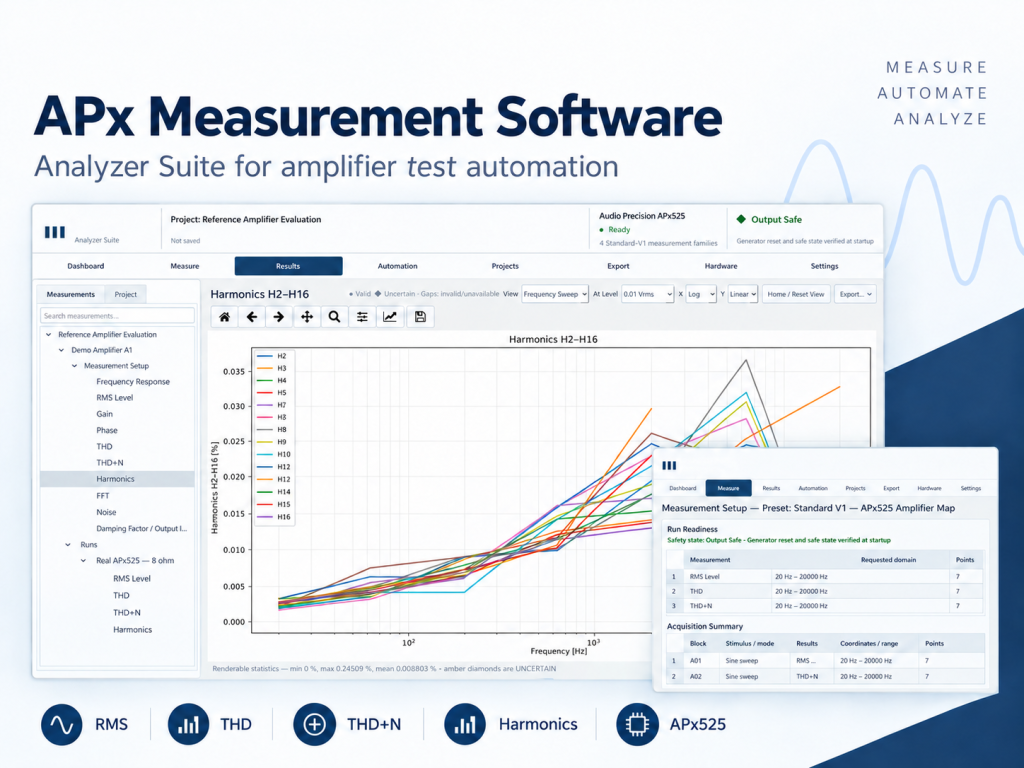
Automated amplifier measurement and analysis
The PHYSICAL LAB Analyzer Suite is being developed to structure amplifier testing from measurement setup through acquisition, analysis and results.
Current development combines APx-based measurement workflows with clear visualization of RMS level, THD, THD+N, harmonics and multidimensional measurement data with a strong focus on repeatability, data integrity and efficient engineering workflows.
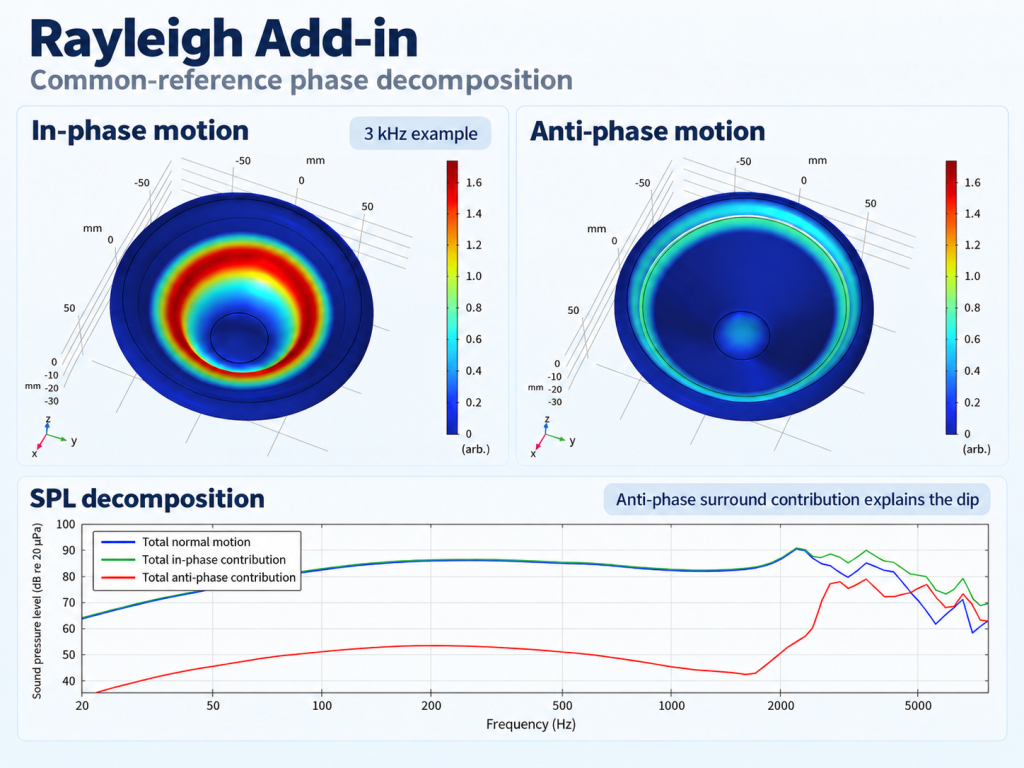
Understand how structural motion contributes to radiated sound
The Rayleigh Add-in provides a physics-based view of how different regions of a vibrating surface contribute to the acoustic response.
Within the Rayleigh radiation model, common-reference in-phase and anti-phase motion can be separated and related to the resulting sound pressure helping to identify cancellation mechanisms and understand complex vibroacoustic behaviour.
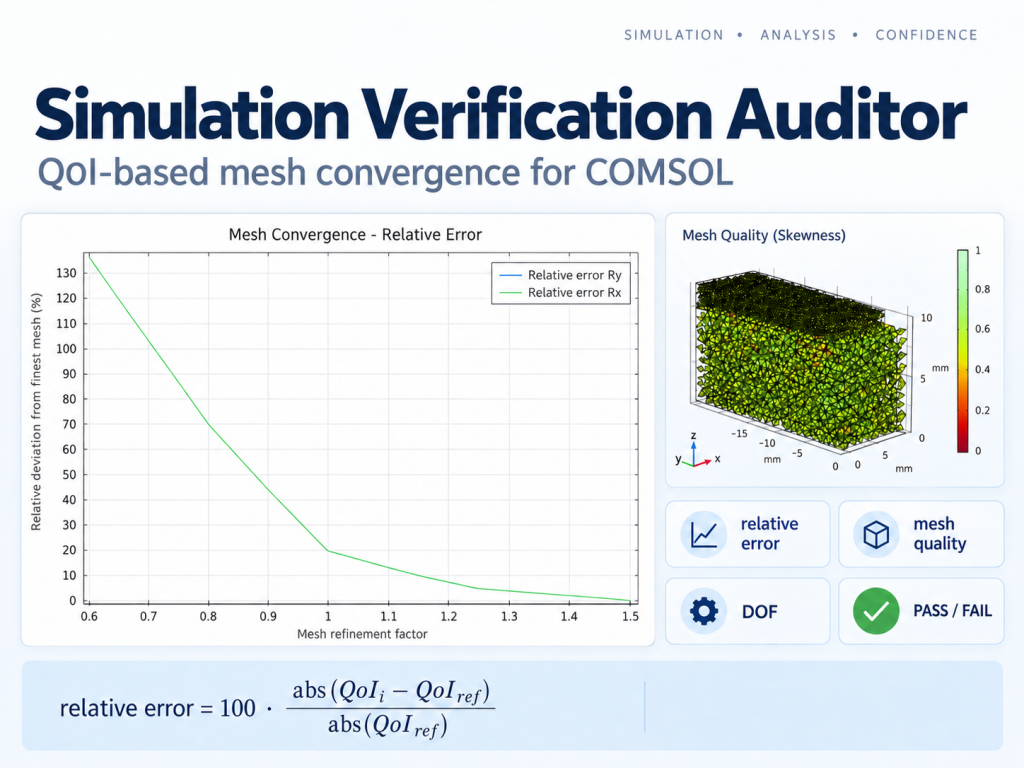
Make mesh convergence a reproducible engineering check
The Simulation Verification Auditor automates mesh-convergence studies around user-defined quantities of interest.
It evaluates convergence across multiple mesh levels while tracking mesh quality, degrees of freedom and solver effort. Configurable tolerances and structured verification results help turn numerical convergence from a visual judgement into a reproducible engineering workflow.
Have a complex acoustic development challenge?
Whether you need simulation, measurement, root-cause analysis or prototype optimization,
PHYSICAL LAB can support your next engineering decision with physics-based insight and practical development experience.